Skip to content
What Is Indian Head Massage?
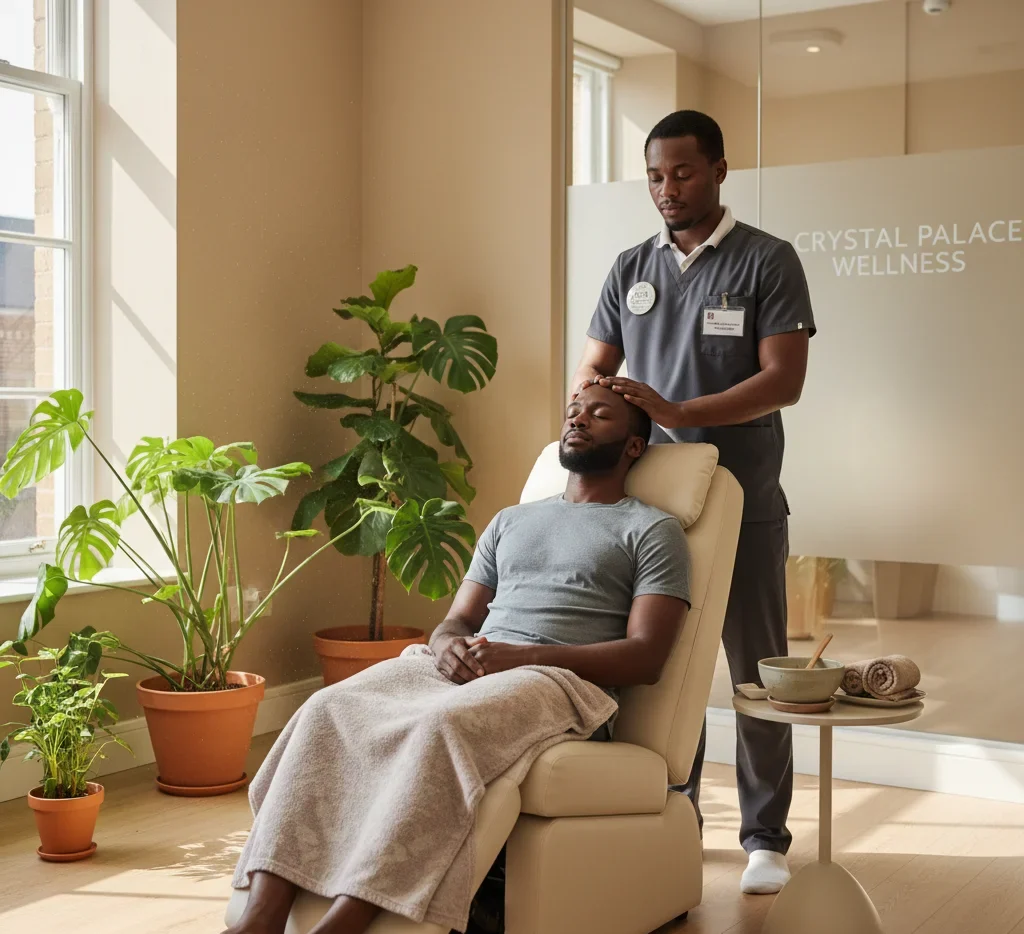
Indian Head Massage is a focused, hands-on therapy that concentrates on the head, neck, shoulders, and upper back. It uses pressure, gentle kneading, rhythmic strokes, and sometimes light tapping. The goal is simple: reduce tension, relax the nervous system, and free up restricted circulation around the head and neck.
This style of massage draws from traditional Ayurvedic practices and has been adapted for modern therapy rooms worldwide. At places like Elysia Wellness, practitioners tailor the session to each person’s needs, creating a calm space to unwind.
Origins and Cultural Background
Indian Head Massage has roots in ancient Ayurvedic healing systems. Historically, it formed part of daily self-care routines in parts of India. Over time, these techniques were refined and combined with practical western massage approaches. Today, the method is taught globally and used for relaxation and therapeutic purposes.
Key Techniques Used
- Compressions and gentle pressure: Applied along the scalp, neck, and shoulders.
- Circular strokes: To increase blood flow and soothe tight muscles.
- Kneading: Focused on muscle knots in the upper back and neck.
- Light percussion: Short taps or rhythms to stimulate circulation and awaken senses.
- Scalp manipulation: Gentle stretches and movements across the scalp to release tension.
How Indian Head Massage Works
At its heart, Indian Head Massage works by addressing two big systems: the musculoskeletal system (muscles and connective tissues) and the nervous system (how your brain perceives stress).
Nervous System and the Relaxation Response
When a therapist soothes tense muscles and moves rhythmically across the head and neck, your body often shifts from the “fight-or-flight” state to the “rest-and-digest” state. That shift calms your breathing, slows your heart rate, and encourages a sense of ease. Think of it like resetting a crowded street back to a peaceful lane.
Circulation and Lymphatic Movement
The massage improves local blood flow and gently encourages lymphatic drainage. Better circulation brings oxygen and nutrients to tight muscles and helps remove metabolic waste. The result? Less muscle fatigue and a lighter, clearer feeling in the head and neck.
Health Benefits — Focus on Stress Relief
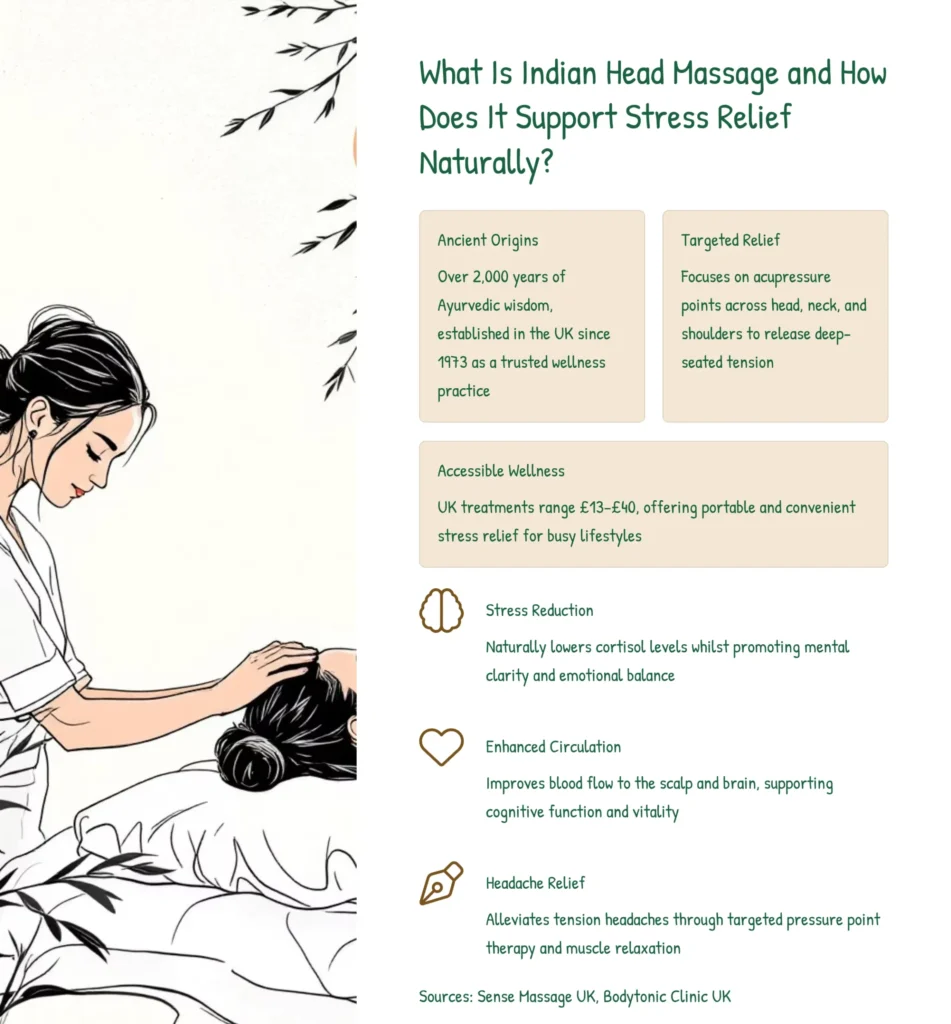
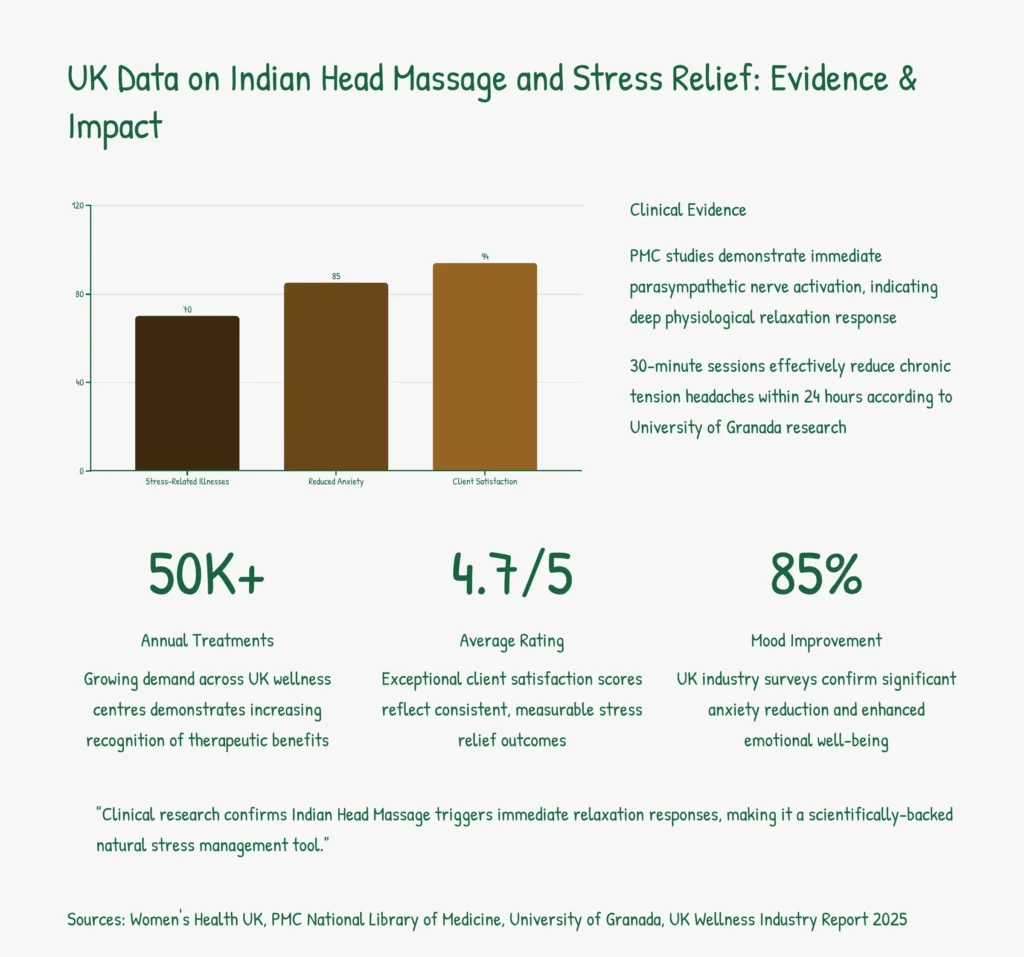
People book an Indian Head Massage for many reasons. Stress relief is one of the most common. Below are the core ways it helps. (Top 7 Health Benefits of Indian Head Massage You Should Know)
Lowering Stress and Calming the Mind
Massage provides direct sensory input to the brain through touch. That input helps interrupt the cycle of worry and muscle tension. A short session can feel like a steady exhale after a long inhale — a reset button for your nervous system.
Improving Sleep and Mental Clarity
By lowering physical tension and calming the mind, many people notice better sleep after a few sessions. Mental clarity often follows because the head and neck are less congested. If your thoughts feel like a tangled headphone cable, this therapy helps untwist the knot.
Relieving Muscular Tension and Headaches
If you carry stress in your shoulders and neck, it often travels up into the scalp and temples. Indian Head Massage targets those exact areas. It can ease tension-type headaches and reduce the tightness that causes them.
Supporting Emotional Wellbeing
Touch is a powerful emotional regulator. A caring, professional session can feel grounding. For many clients, the therapy becomes a small ritual of self-care that supports long-term emotional balance.
Who Can Benefit?
Indian Head Massage is adaptable. Many people can gain from it, but there are specific groups who often find it especially helpful.
Common Clients
- Office workers: Long hours at a desk tighten the neck and shoulders.
- Parents and caregivers: High stress and poor sleep are common.
- Students: Mental fatigue and headaches from studying.
- Older adults: Gentle pressure helps with circulation and relaxation.
- Athletes: Helps relieve upper-body tension after training.
Safety and Contraindications
Although safe for most people, there are times to take care:
- Recent head or neck injuries.
- Severe migraines under medical treatment.
- Skin conditions or scalp infections.
- Uncontrolled high blood pressure.
- Recent surgery in the treatment area.
Always tell your therapist about medical history. A good practitioner will adapt or pause the session if needed.
What to Expect During a Session
Curious about how a session flows? Here’s a step-by-step of a typical Indian Head Massage.
Initial Consultation and Tailoring the Session
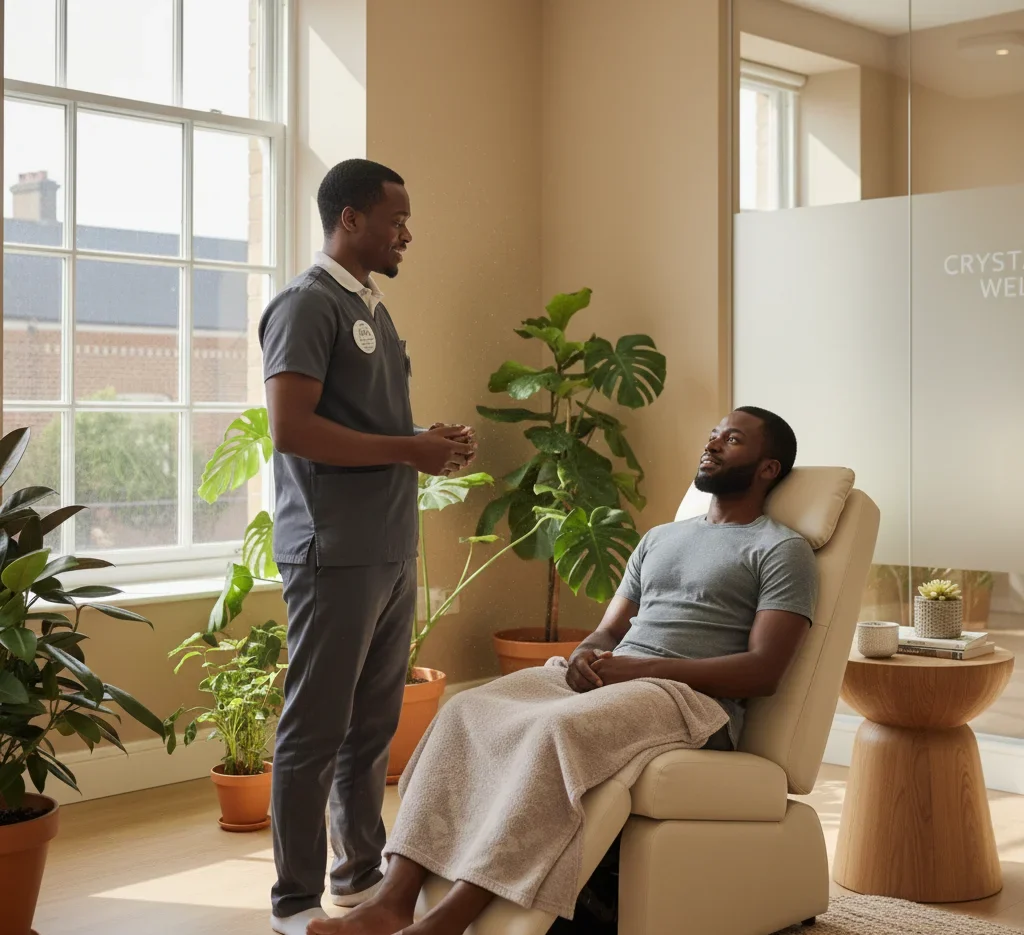
Your therapist will ask a few questions: Why are you here? Any areas of pain? Any health issues? This helps them adjust pressure and technique.
Duration and Pace
Sessions can range from 20 to 60 minutes. Shorter sessions are great for quick relief. Longer ones allow deeper work and extended relaxation.
Oils and Scents
Some therapists use light, calming oils on the scalp and neck. Others work without oils. If you’re sensitive to scents, tell your therapist beforehand.
Typical Sequence
- Gentle breathing and centering.
- Upper back and shoulder work to release tight anchors.
- Neck and base of skull mobilizations.
- Scalp strokes, circular movements, and gentle pulls.
- A short period of stillness to let the body integrate the changes.
Aftercare
Drink water after the session. Rest if you can. Some people feel a slight tiredness — that’s normal. It’s the body recalibrating.
Preparing for Your Massage
A little preparation improves the experience.
Clothing and Modesty
Wear comfortable clothes. You don’t need to remove clothing — the therapist will work on top of your clothes or with a light drape. Loose collars or tops help with neck access.
Pre- and Post-Session Tips
- Avoid heavy meals right before your appointment.
- Drink water after.
- Avoid strenuous activity immediately after a deep session.
- Note any changes and mention them in your next visit.
How Often Should You Get Indian Head Massage?
There’s no one-size-fits-all answer. Consider these guidelines as a starting point:
- For acute stress or tightness: 1–2 sessions per week for a short period.
- For maintenance and wellbeing: Once every 2–4 weeks.
- For deep, chronic tension: A tailored plan with your therapist might be best.
Think of it like watering a plant. When it’s dry, you water more often. As the plant recovers, you reduce frequency.
Common Myths and Misconceptions
Let’s clear up a few misunderstandings.
“It’s only for the head”
No. Although the name highlights the head, the treatment involves shoulders, neck, and upper back. Those areas are key to head tension.
“It’s painful”
A properly tailored session should not be painful. The therapist should ask for feedback and adjust pressure. Discomfort can be addressed, but it shouldn’t be a painful experience.
“It’s only for women”
Not true. People of all genders benefit. The therapy is about relieving tension and improving wellbeing — universal needs.
How Indian Head Massage Fits Into a Holistic Wellness Plan
Indian Head Massage is a single, powerful tool. But it works best alongside other habits.
Combining with Yoga and Meditation
Stretching and breathing practices amplify the benefits. Yoga opens tight muscles. Meditation trains the mind to rest more easily. Together, they form a multiplier effect.
Sleep Hygiene and Lifestyle
Better sleep patterns support the massage work. Hydration, gentle movement, and reduced screen time before bed make each session more effective.

Choosing a Therapist in Crystal Palace
Finding the right therapist matters. Here are practical tips for local search and selection.
Questions to Ask Your Therapist
- What training and certification do you have?
- How do you tailor sessions for stress?
- Do you use oils or work dry?
- Are there any conditions you work around or avoid?
Why Elysia Wellness Focuses on Personalized Care
At Elysia Wellness, we emphasize listening first. Each client brings a story of tension, work, or restlessness. We match technique and pace to that story. That approach makes the therapy feel personal, safe, and effective — especially for people searching for Indian Head Massage Crystal Palace.
When to Seek Medical Advice
If you have serious or worsening symptoms, speak to a medical professional. Examples include:
- Sudden or severe headaches.
- Neurological changes like vision problems or numbness.
- Unexplained dizziness or fainting.
Massage supports wellness, but it is not a replacement for medical diagnosis or treatment.
Practical Tips for First-Timers
A few small touches make your first session smoother.
- Arrive a little early to settle in.
- Mention recent injuries or medications.
- Tell the therapist your pressure preference.
- Expect to feel relaxed and perhaps a little sleepy afterward.
- Note any lingering benefits in a journal — it helps track progress.
Measuring Results — What to Look For
How do you know it’s working? Look for these signs over time:
- Reduced frequency or intensity of headaches.
- Easier shoulder range of motion.
- Better sleep patterns.
- A general sense of calm and reduced reactivity to stress.
Small wins add up. Even a small shift in your posture or one night of better sleep counts as progress.
Indian Head Massage is a gentle, focused therapy that helps relieve stress, ease tension, and support better sleep and mental clarity. It works through thoughtful, targeted touch that calms the nervous system and improves local circulation. Whether you live near Crystal Palace or simply want a routine to reduce daily stress, this therapy is a practical, low-risk tool to add to your self-care plan.
If you’re exploring options in the area, searching for Indian Head Massage Crystal Palace will help you find local practitioners who tailor sessions to your needs. Clinics like Elysia Wellness emphasize personalized, evidence-informed care so you leave feeling lighter and more centered.
Elysia Wellness Serving the Gipsy Hill Community and Beyond in Crystal Palace
At Elysia Wellness, we are dedicated to serving the wellbeing needs of the Crystal Palace community and nearby neighborhoods like Gipsy Hill. Conveniently located near local landmarks such as Westow Park and close to major intersections like Coxwell Rd and Haynes Ln (coordinates: 51.417912668584755, -0.08130576961008054), our space is designed to provide easy access for clients across South London.
We specialize in therapies that support stress relief and relaxation, including our popular Indian Head Massage service. This treatment is ideal for easing tension, improving mental clarity, and restoring balance, making it a trusted choice for individuals seeking holistic wellness in the Crystal Palace area.
Get Indian Head Massage Services at Gipsy Hill Today
📞 Call us at +442039166787
🌐 Visit us online: ElysiaWellness4me.com
Navigate from [Gipsy Hill] to [Elysia Wellness] Now
Q1: How long is a typical Indian Head Massage session?
A: Sessions commonly last between 20 and 60 minutes. Short sessions are ideal for a quick reset. Longer sessions allow for deeper work and a more restorative experience.
Q2: Can Indian Head Massage help with migraines?
A: Many people find it can reduce the frequency or intensity of tension-type headaches. For migraines, it may help some individuals, but it’s important to consult a healthcare professional for diagnosis and a comprehensive plan.
Q3: Is Indian Head Massage suitable during pregnancy?
A: It can be, but only with a therapist experienced in prenatal care. Always inform the therapist about your pregnancy stage and any related issues before booking.
Q4: Will I need to remove my clothing?
A: No. Indian Head Massage is typically done with you seated and clothed or with a light drape. The therapist works on the neck, shoulders, and scalp with access provided by loose or removed collars.
Q5: How quickly will I feel benefits after the first session?
A: Some people feel immediate relaxation and lighter tension after one session. Others notice gradual improvements over multiple sessions. Consistency often brings the most reliable results.