Skip to content
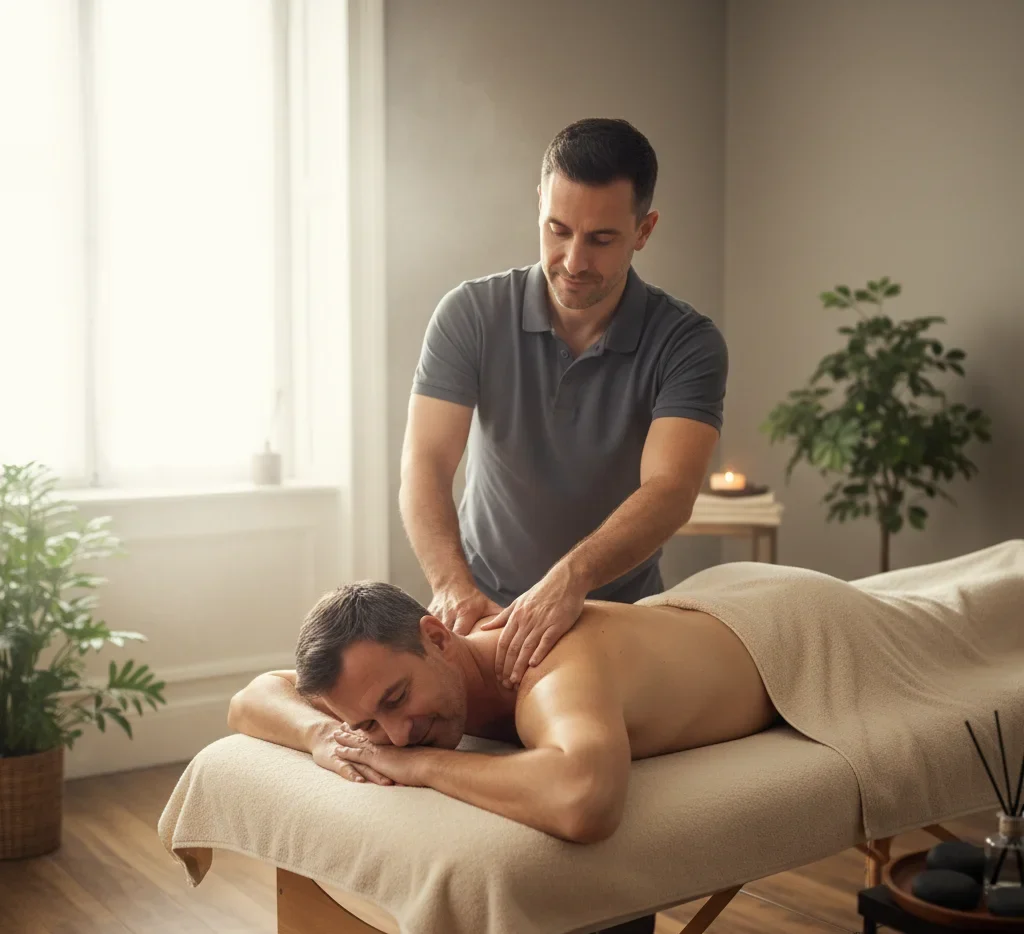
Recovery isn’t optional. It’s part of training. If you train hard, you must recover hard. Recovery helps muscle repair. It restores energy. It sharpens focus. Without it, gains stall and injuries rise.
Massage is one tool in the recovery toolbox. But when is massage most effective for athletes? Timing matters. Technique matters. So does the athlete’s sport, training load, and goals.
This article explains the best times to use massage during recovery. You’ll get a clear timeline, practical tips, a sample weekly plan, safety notes, and ways to measure if massage is working. I’ll also mention how local services such as Massage Crystal Palace options — including clinics like Elysia Wellness — fit into an athlete’s routine without sounding like a hard sell. Think of this as a coach’s playbook for massage and recovery.
What is sports massage and why athletes use it
Athletic or sports massage is targeted. It focuses on muscles used in sport. It’s not just “relaxation” — although it can be calming. Sports massage aims to:
- Reduce muscle tightness
- Improve range of motion
- Speed recovery from training and minor strains
- Help manage soreness after intense sessions
Massage helps the tissues, the nervous system, and sometimes the mind. It’s like tuning an engine. You don’t replace parts; you adjust, clean, and lubricate.
Common sports massage techniques
Swedish massage
Long, gliding strokes. Good for general relaxation and circulation. Often used after light sessions.
Deep tissue massage
Slower, firmer pressure. Targets tight bands and adhesions. Useful for chronic tightness, but can be intense.
Myofascial release
Focuses on fascia — the connective tissue around muscles. Gentle sustained pressure helps release restrictions.
Trigger point therapy
Targets painful knots that refer pain to other areas. Short, focused pressure can reduce referred pain patterns.
Lymphatic drainage
Light strokes that assist fluid movement. Helpful after heavy training or minor swelling.
Compression and sports-specific strokes
Rhythmic compressions and strokes mimic athletic movements. Good for warm-ups or cool-downs.
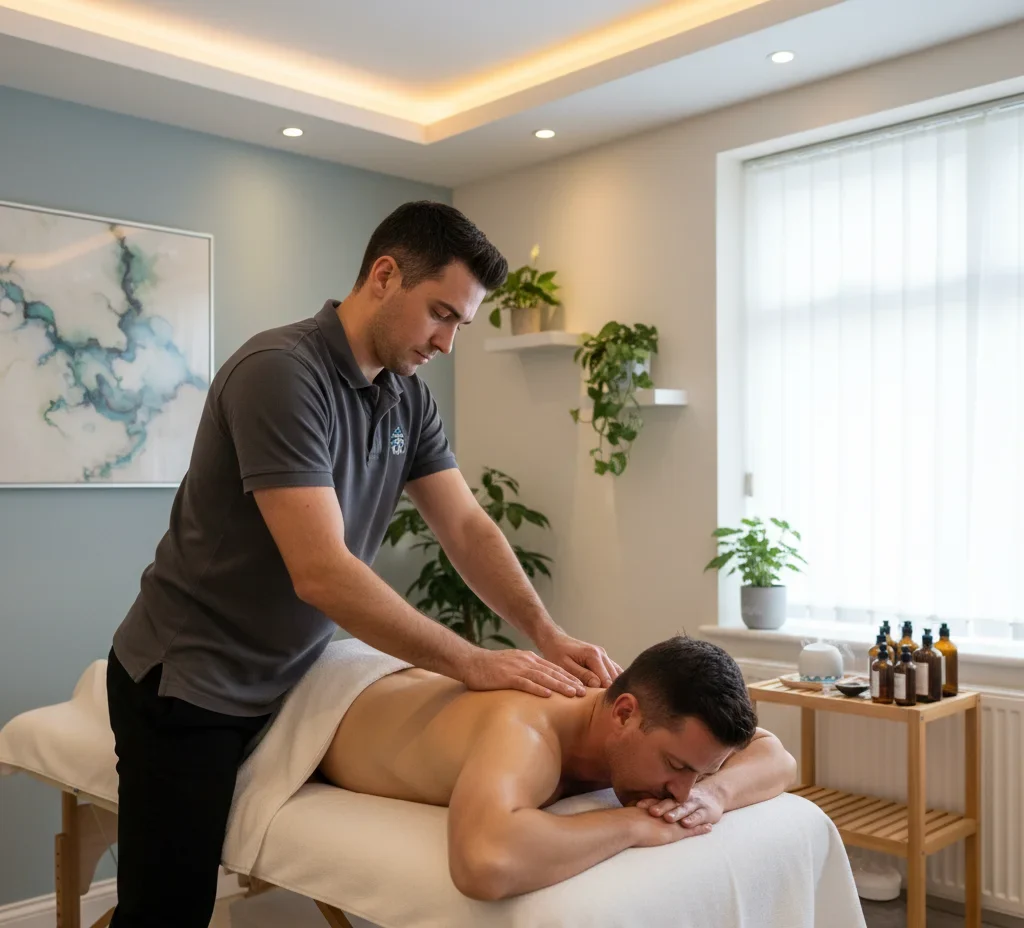
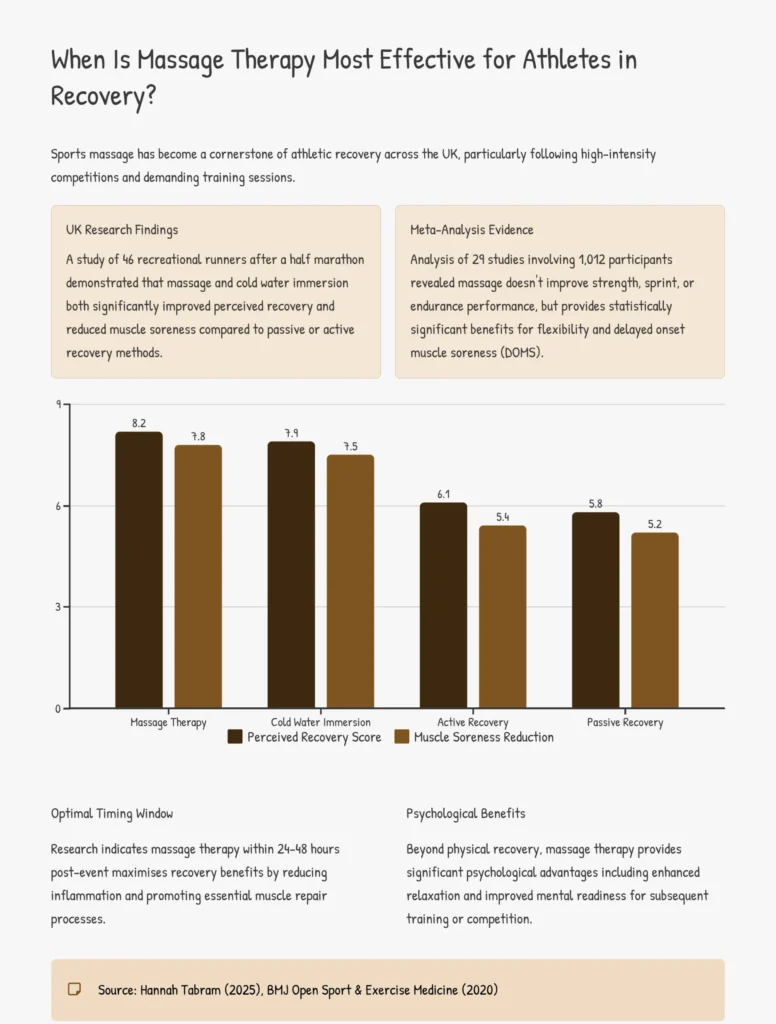
When is massage therapy most effective? — the recovery timeline
Timing is everything. Different windows after exercise offer different benefits. Let’s break them down.
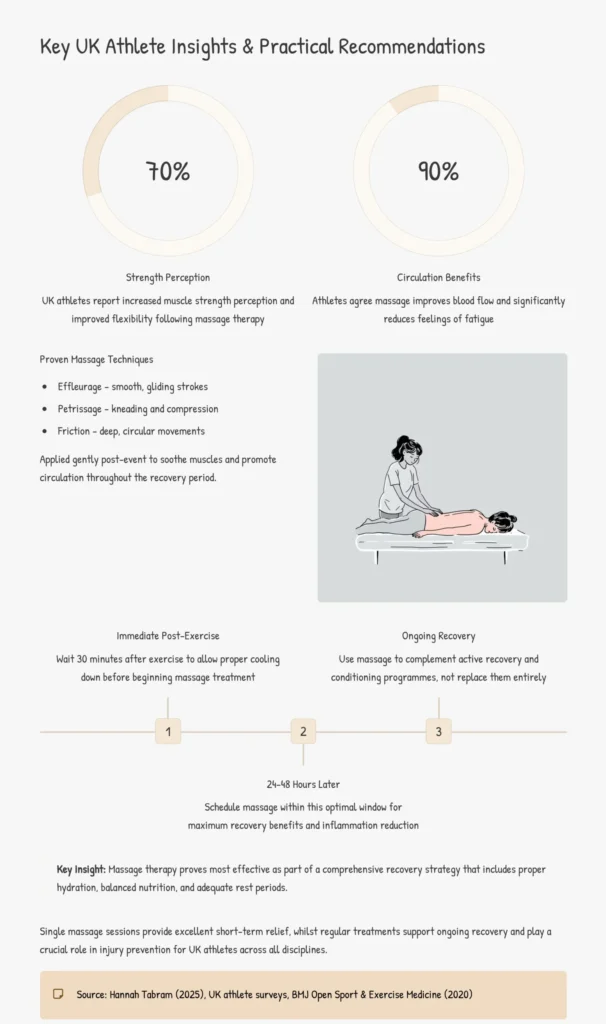
Immediately after training (within 0–2 hours)
What you can expect: gentle massage can calm the nervous system and help flush metabolic waste. It’s not the time for aggressive deep tissue work. Think of a short cooldown for your muscles.
Best for: athletes who need a quick reset after a scrappy session or game. Useful for reducing acute tightness and lowering heart rate.
How to use it: 10–20 minutes of light, rhythmic strokes or compression. Ask for low pressure. This helps circulation and signals relaxation to the nervous system.
Pros: immediate relaxation, reduced tightness, faster mental recovery.
Cons: deep work can increase soreness if done too soon.
Within 24 hours (early recovery window)
What you can expect: massage helps reduce early inflammation and may ease the onset of soreness. It’s a good time for slightly deeper work than the immediate window, but still moderate.
Best for: after intense training days or matches when you plan light sessions the next day.
How to use it: 20–45 minutes focusing on major muscle groups used during training. Include some myofascial and gentle trigger point work.
Pros: may reduce delayed onset muscle soreness (DOMS) and improve movement the next day.
Cons: if tissues are acutely inflamed or injured, adjust technique or avoid aggressive pressure.
24–72 hours post-exercise (peak DOMS window)
What you can expect: this is when soreness often peaks. Massage can help speed recovery and reduce discomfort. Techniques like myofascial release, gentle deep tissue, and lymphatic work are useful.
Best for: high-intensity or unfamiliar workouts that caused soreness.
How to use it: sessions of 30–60 minutes combining release work, lymphatic techniques, and active movement integration.
Pros: improved mobility, reduced soreness, better movement patterns.
Cons: very intense pressure on extremely sore muscles can be uncomfortable — communicate with your therapist.
Between competitions (maintenance window)
What you can expect: maintenance massage helps keep muscles flexible and prevent small issues from becoming big ones. This is strategic, not reactive.
Best for: competition weeks, tournament play, or peak training blocks.
How to use it: shorter, focused sessions (20–40 minutes) targeting areas that affect performance, like hips, calves, shoulders, or lower back.
Pros: maintains range of motion, reduces injury risk, supports readiness.
Cons: poor timing (e.g., a heavy deep session the day before an event) can reduce sharpness — plan carefully.
During the off-season or active rest
What you can expect: broader, restorative sessions. Focus shifts from performance to recovery, repair, and long-term mobility.
Best for: rebuilding tissue balance, addressing chronic issues, or following rehab protocols.
How to use it: regular sessions (weekly or biweekly) that include deeper work, corrective strategies, and home-care guidance.
Pros: resolves lingering restrictions and improves baseline function.
Cons: none if aligned with rehab guidance or sports medicine advice.
How timing changes with sport type and training load
Not every athlete needs the same timing.
Endurance athletes (runners, cyclists, triathletes)
They often benefit from regular maintenance massage between long sessions. Quick post-long-ride or run massage improves circulation and reduces stiffness.
Power and strength athletes (sprinters, lifters)
They need careful timing around maximal lifts. Avoid heavy deep tissue work just before a max lift. Post-lift, massage can ease tightness and restore movement patterns.
Team sports (football, rugby, hockey)
Match days require precise timing: light pre-game prep, short post-game cooldown massage, then fuller recovery work in the following 24–72 hours.
Court and agility sports (tennis, squash, badminton)
Frequent bursts require focused work on shoulders, forearms, hips, and calves. Short but targeted massages during tournament days keep athletes moving.
In short: match massage timing to the sport’s energy systems and event schedule.
Which signs tell you an athlete needs massage
How do you know it’s time? Look for:
- Persistent stiffness that limits range of motion
- Increasing training soreness that doesn’t resolve with rest
- Recurrent knots or trigger points that affect technique
- Sleep disturbances or increased perceived fatigue
- Reduced performance or slower recovery between sessions
If you answer “yes” to several of these, massage can help—especially when timed within the right recovery window.
How often should athletes get massage?
There’s no one-size-fits-all. Frequency depends on training phase and budget. Here are practical guidelines:
High-load competition or training phase
2–3 sessions per week, short and focused. Maintain mobility and address acute tightness.
Moderate-load training
1 session per week. Keeps baseline mobility and helps manage minor niggles.
Maintenance or off-season
Every 2–4 weeks. Focus on long-term tissue health and correcting imbalances.
Travel or tournament blocks
Daily or near-daily short sessions (10–25 minutes) can be useful for managing fatigue and travel-related stiffness.
Think of frequency like tuning. During intense training you tune more often. When you’re cruising, less tuning is fine.
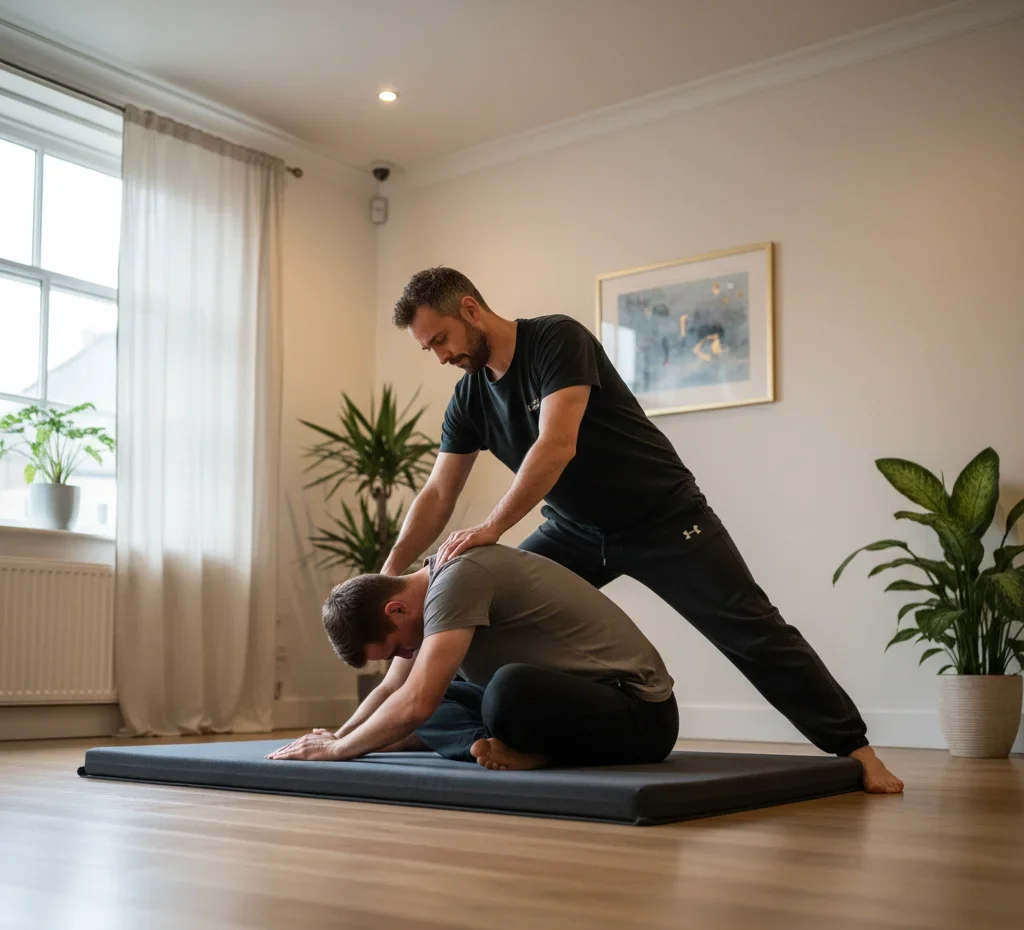
How to combine massage with other recovery tools
Massage is powerful, but it works best with other tools.
Sleep
Sleep is the top recovery tool. Massage can help improve sleep quality but won’t replace it.
Nutrition and hydration
Protein and carbs for repair. Hydration helps circulation — which massage relies on to move fluids.
Active recovery
Easy rides or swims complement massage. Movement helps the tissues integrate the effects of massage.
Compression and cryotherapy
Use them strategically. Compression after heavy games reduces swelling; cryotherapy can reduce acute inflammation. Massage often follows the acute phase once inflammation subsides.
Foam rolling and self-massage
These keep gains between therapist sessions. Use them daily as a supplement.
Sequence example: Immediately after training — light massage or self-massage + hydration. Within 24–72 hours — fuller massage, sleep focus, and targeted nutrition.
What to expect during a sports massage session
Curious about the session flow? Here’s a simple roadmap.
Intake and brief assessment
You’ll discuss recent training, current pain, sleep, and goals. Good therapists ask specific questions.
Warm-up and circulation work
Light strokes or movement to increase blood flow.
Focused work
Therapist applies techniques to target problem areas — trigger point work, release, compressions.
Integration
Movement tests, stretches, and functional checks ensure changes stick.
Home-care recommendations
Expect simple exercises, stretches, or recovery tips to extend the benefits.
Sessions vary by therapist and athlete. Communication is key. Tell the therapist what feels good and what doesn’t.
Safety and contraindications
Massage is safe for most athletes, but there are times to avoid or modify it.
When to avoid massage
- Open wounds or recent fractures
- Severe, unexplained swelling or redness
- Fever or contagious illness
- Acute deep vein thrombosis (DVT) — requires medical clearance
When to modify
- Recent surgery — follow clinician guidance
- Acute inflammation — prefer lymphatic or gentle techniques
- Blood-thinning medication — use lighter pressure
Always tell your therapist about injuries, medications, and medical history. Safety first.
Measuring effectiveness: simple metrics athletes can use
How do you know massage helped? Use metrics.
Subjective measures
- Sleep quality
- Perceived recovery (ask: “How ready do I feel for the next session?”)
- Pain scales (1–10) before and after
Objective measures
- Range of motion tests (e.g., sit-and-reach, shoulder flexion)
- Jump height or sprint time changes across days
- Training consistency (fewer missed sessions)
Track these over weeks. Small, consistent improvements matter more than one-off changes.
How therapists tailor massage for injured vs healthy athletes
A therapist treats an injured athlete differently than a well athlete.
For injured athletes:
- Work closely with medical professionals
- Use gentler techniques early on
- Focus on swelling control, pain modulation, and restoring safe movement
For healthy athletes:
- Emphasize maintenance, mobility, and optimizing performance
- Use proactive techniques to prevent injury
Good therapists blend art and evidence. They adapt to you, not a checklist.
Practical weekly recovery plan example
Here’s a sample week for a semi-professional athlete during a heavy training block. Adjust to your sport and schedule.
Monday — Heavy training
- Evening: 15-minute light massage (post-session) for cooldown.
Tuesday — Intense interval session
- Morning: self-massage and mobility
- Evening: 30-minute focused massage (24-hour recovery window)
Wednesday — Moderate session
- Active recovery + foam rolling
Thursday — Strength day
- Pre-session: brief dynamic warm-up
- Post-session: 20-minute massage targeting tight muscle groups
Friday — Light session
- Rest or light cross-training
Saturday — Competition or long session
- Pre-event: short activation massage (10 min)
- Post-event: 20 min cooldown massage + lymphatic focus
Sunday — Off / active rest
- Optional light full session (45–60 min) focused on longer-term problems
This plan mixes timing windows to show how massage can be used strategically rather than randomly.
Tips for maximizing massage benefits on limited time or budget
Not everyone can get daily treatments. Use these hacks.
- Prioritize key windows — post-hard sessions and the 24–72 hour window.
- Self-care between sessions — foam rolling, compression, hydration.
- Short sessions work — even 10–20 minutes on key areas helps.
- Communicate goals — tell the therapist exactly what you need.
- Integrate with sleep and nutrition — massage amplifies other recovery tools.
Think quality over quantity. A focused 20-minute session beats an unfocused hour.
Why local clinics like Elysia Wellness matter for athletes
Access and consistency matter. If you train in or near Crystal Palace, Massage Crystal Palace options provide practical benefits: easy scheduling around training, knowledge of local athletes, and therapists who understand common regional demands (e.g., commuting, cycling routes).
Clinics such as Elysia Wellness often blend sports-focused techniques with recovery planning. That local connection helps athletes stick to a recovery plan. It also makes it easier to schedule sessions in strategic windows like post-training or tournament days. Again, this is about practicality and consistency — not a hard sell.
Common myths and quick clarifications
- Myth: Massage “removes lactic acid.”
Truth: Lactic acid clears on its own. Massage helps circulation and reduces sensation of fatigue. - Myth: Deeper always equals better.
Truth: Deeper work has its place, but timing and individual tolerance matter. Too deep at the wrong time can delay recovery. - Myth: One session fixes everything.
Truth: Consistency and integration with sleep, nutrition, and training produce real gains.
Local Focus: Massage Therapy in Crystal Palace and Gipsy Hill
Elysia Wellness is dedicated to serving the diverse needs of the local community in Crystal Palace, London, including nearby neighborhoods such as Gipsy Hill. Our convenient location makes it easy for residents to include professional massage therapy as part of their wellness routine.
Situated close to well-known landmarks like Westow Park Playground, and just a short walk from major intersections such as Haynes Lane and Ovett Close, our clinic is easy to access whether you’re arriving on foot, by car, or by public transport. For precise navigation, our coordinates are: 51.41853065073113, -0.08232202373456467.
At Elysia Wellness, we provide a range of massage services, including deep tissue, sports, Thai yoga, and relaxation treatments. By offering Massage Crystal Palace services, we aim to help the Gipsy Hill and Crystal Palace communities find balance, reduce stress, and support athletic recovery.
Massage is a powerful ally for athletes — when used at the right time and with the right technique. The most effective windows are the immediate cooldown, the 24–72 hour recovery window, and strategic maintenance between competitions. Match the timing to your sport, training load, and goals. Use massage with sleep, nutrition, and active recovery for the best results. If you train around Crystal Palace, local options for Massage Crystal Palace — including clinics like Elysia Wellness — make it easier to fit massage into strategic recovery windows. Treat massage as tuning, not a fix-all: regular, well-timed care keeps you performing at your best.
Get Massage Services at Gipsy Hill Now
Navigate from Gipsy Hill to Elysia Wellness Now
Frequently Asked Questions (FAQs)
Q1: How soon after a match should I get a massage?
Aim for a light cooldown massage within 0–2 hours after a match, then a fuller recovery session within 24–72 hours if needed.
Q2: Will massage prevent muscle soreness after a hard workout?
Massage can reduce the intensity and duration of soreness, especially when applied in the 24–72 hour window and combined with sleep and proper nutrition.
Q3: Can I have a deep tissue massage the day before a competition?
It’s usually better to avoid very deep, intensive work the day before a key event. Opt for lighter, mobility-focused work that keeps you feeling fresh.
Q4: How do I find the right therapist for my sport?
Look for therapists with experience in sports massage, positive athlete references, and a willingness to coordinate with your coach or physio. Local clinics offering Massage Crystal Palace services often have staff familiar with common athlete needs.
Q5: What should I tell my therapist before a session?
Share recent training load, any injuries, medications, pain levels, and your goals for the session (e.g., recovery, mobility, pain relief). Clear communication ensures the massage is timed and tailored to help you most.