Skip to content
Good posture isn’t just about standing up straight for appearances. It’s about how your skeleton, muscles, and nervous system share the job of holding you upright — day after day, hour after hour. When certain muscles get tight and others get weak, your body adapts by shifting its balance. That shift creates stiffness, pain, and slower movement. Over time, poor posture can mean headaches, shoulder problems, and back pain that keeps you from doing things you enjoy.
If you live in or near Crystal Palace and you’re searching for ways to improve posture, the phrase Massage Crystal Palace might have brought you here. Massage is one of the most direct, hands-on tools to reduce stiffness and re-balance muscles. At Elysia Wellness, therapists often use massage as part of a broader posture program — not as a miracle cure, but as a powerful, practical component that helps people move better and feel better.
Below you’ll find a full, human-friendly guide: what massage does, which methods help posture, how to integrate massage with exercise and ergonomics, and realistic timelines. This is informational, practical, and aimed at getting you good results without hype.
How Massage Affects the Body: a clear, simple overview?
Massage works on three big systems at once: the muscles, the connective tissues (fascia), and the nervous system. Think of massage as both a mechanical nudge and a nervous-system reset.
What massage does to muscles
Muscles respond to pressure, stretch, and movement. Massage can:
- Soften knots and tight bands of muscle (the things we call trigger points).
- Increase local blood flow so tissues get oxygen and nutrients.
- Encourage relaxation in chronically contracted muscles.
Imagine a stiff rubber band left in a tight coil for weeks. A gentle, repeated stretching and warming brings it back closer to its original shape. Massage does the same for muscle tissue.
How massage influences fascia and mobility
Fascia is the web of connective tissue that surrounds muscles and organs. When fascia tightens or sticks, it limits glide and range of motion. Techniques like myofascial release work slowly to restore that glide, helping joints move more freely.
The nervous system and “resetting” tension
Pain and posture are partly controlled by reflexes. When you sit at a screen all day, your shoulders round; your nervous system begins to accept that as “normal.” A skilled massage will both reduce local tension and send signals to your brain that a different, less-protected posture is possible — slowly changing habit at a neural level.
Which massage techniques help posture most (and why they work)?
Not all massage is the same. Different styles deliver different benefits. Below are techniques most often used for posture correction and stiffness reduction.
Deep Tissue Massage — releasing chronic tension
Deep tissue reaches deeper muscle layers with slow, sustained pressure. It’s excellent for people with long-standing tightness (think: tight lower traps, tense pecs, tight hip flexors). It helps break apart adhesions and encourages muscle lengthening.
Myofascial Release — freeing stuck tissues
This method focuses on the fascia. Therapists use sustained, gentle pressure and stretching to restore tissue glide. For posture, that’s crucial: fascia that restricts shoulder or thoracic mobility will keep posture poor even if the muscles are “looser.”
Thai Yoga Massage — movement plus stretch
Thai massage blends assisted stretching and rhythmic pressure. It’s especially useful when stiffness is part of reduced joint range. By combining movement and compression, it can restore functional mobility — meaning not just feeling better, but moving better.
Trigger Point Therapy — targeted knot work
Trigger points are localized tight spots that refer pain elsewhere (a tight neck knot causing a headache). Releasing these points reduces protective muscle guarding and makes posture correction more achievable.
Combination approaches (H4)
Often the fastest improvement comes from mixing techniques. A session might begin with myofascial release, follow with trigger point work, and finish with light joint mobilization or Thai stretching.
When to consider massage for posture correction?
Massage is useful at many stages. But timing and frequency matter.
Signs your posture needs help
Consider massage if you have:
- Persistent neck or upper back stiffness.
- Rounded shoulders and thoracic stiffness.
- Headaches that feel linked to neck tension.
- Difficulty sitting upright comfortably for hours.
- Reduced range when reaching or turning.
How often should you get massage for posture?
There’s no one-size-fits-all. Early on, a program might include 1–2 sessions per week for 4–6 weeks, combined with home exercises. As posture improves, spacing can increase to fortnightly or monthly maintenance sessions. A therapist will tailor frequency to your needs, recovery speed, and lifestyle.
Where massage fits into a full posture program?
Massage is powerful. But it’s one player. For lasting change, combine it with exercise, ergonomics, and self-care.
Exercise & mobility work
Stretching tight tissues and strengthening weak muscles is essential. Massage reduces the tension that blocks progress; then mobility exercises and strengthening help lock in a better alignment.
Ergonomics and daily habits
Fixing a desk setup, monitoring phone posture, and getting up every 30–45 minutes to move are simple steps that remove repeated strain. Massage helps you feel the benefits; better ergonomic habits make them stick.
Professional assessment and goal setting
Start with a simple assessment: photos, range-of-motion checks, and questions about pain and function. Set measurable goals (e.g., “sit upright at work for 45 minutes without pain” or “reach overhead with less than 20° pain”). Use massage as a targeted tool toward those goals.
How a typical posture-focused massage session looks?
If you’ve never had a posture-focused session, here’s a walkthrough so you know what to expect.
Initial assessment
A therapist asks about your daily life, pain, and movement. They check posture and simple movements — often a quick standing photo or mobility test.
Techniques used during the session
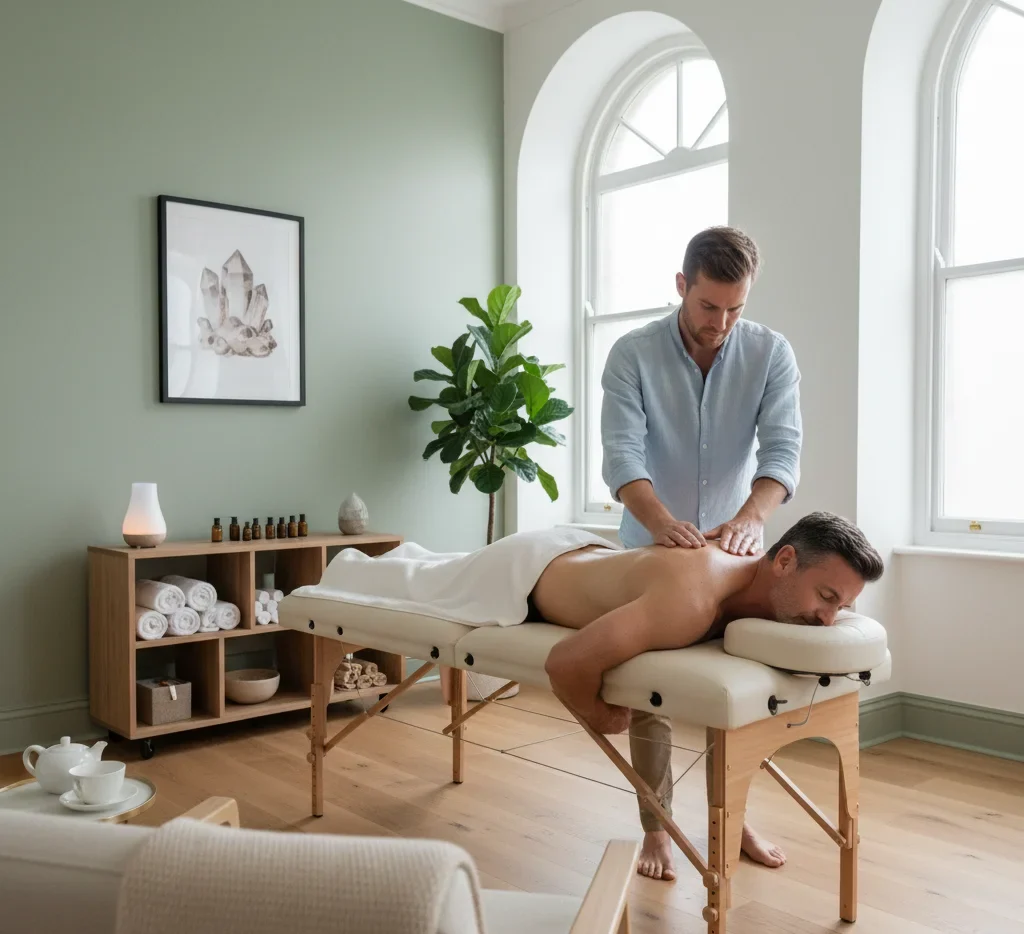
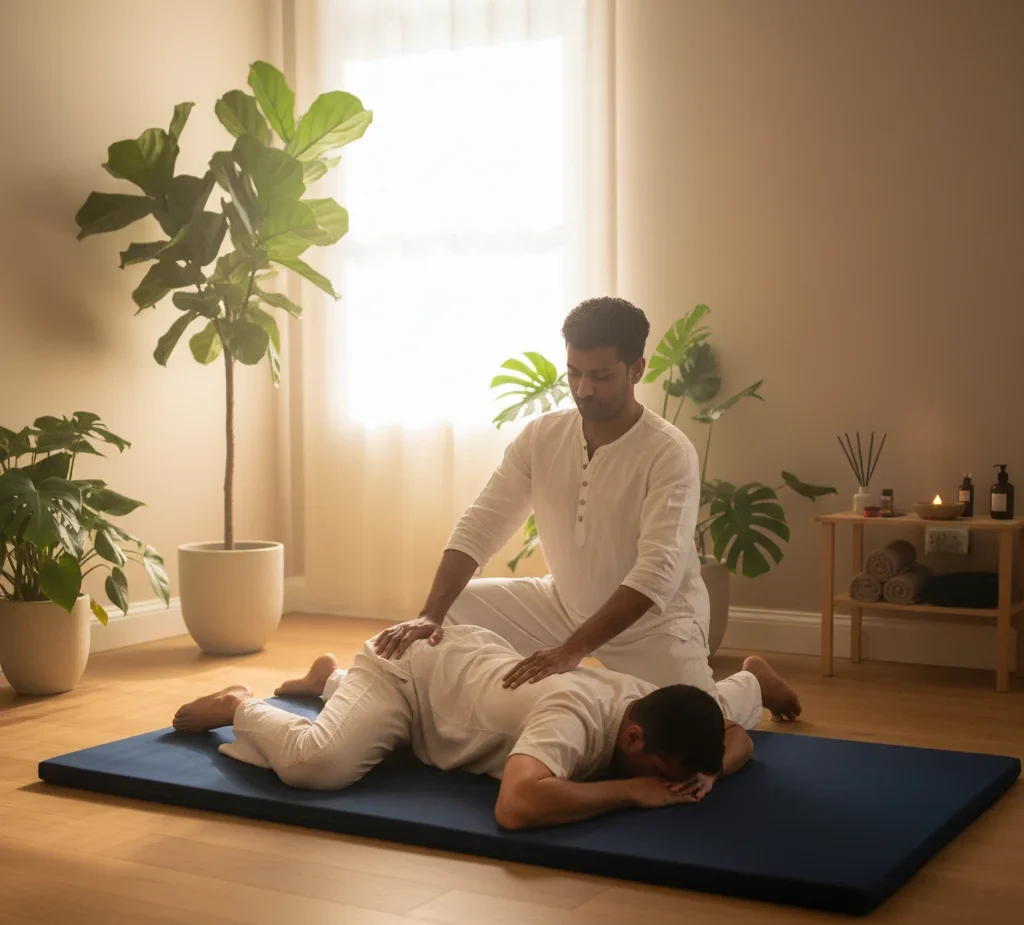
Expect a mix: kneading, sustained pressure, myofascial stretches, and sometimes guided active movement (you move while the therapist supports the joint). Sessions are collaborative — therapists may ask you to breathe, move, or try a tiny stretch.
Aftercare and home exercises
A good session ends with simple exercises and habits you can do at home: a thoracic mobility drill, a doorway pec stretch, or a short neural-mobility routine. These tiny habits compound.
Which clients benefit most — practical examples?
Massage helps many people. Here are common client types and how massage fits their needs.
Office workers and “tech neck”
Hunching forward all day causes chest tightness and upper-back weakness. Massage loosens the chest and neck, reducing the reflexive “guarding” that keeps shoulders rounded.
Athletes and weekend warriors
Tight hips, lats, or calves change movement patterns. Massage helps muscles relax and recover, making strength and mobility work more effective.
Older adults with stiffness
As we age, tissues stiffen. Gentle myofascial work and mobility-focused massage can greatly improve comfort and daily function.
Safety, contraindications, and who should be cautious?
Massage is safe for most people, but there are situations that require caution.
Medical red flags
Avoid deep massage or specific techniques if you have:
- Unexplained swelling or a recent blood clot history.
- Acute fractures, severe osteoporosis, or active infection.
- Severe, undiagnosed pain — see a physician first.
How therapists adapt
A skilled therapist modifies pressure, uses gentler techniques, or combines massage with light movement and breathing to keep you safe and comfortable.
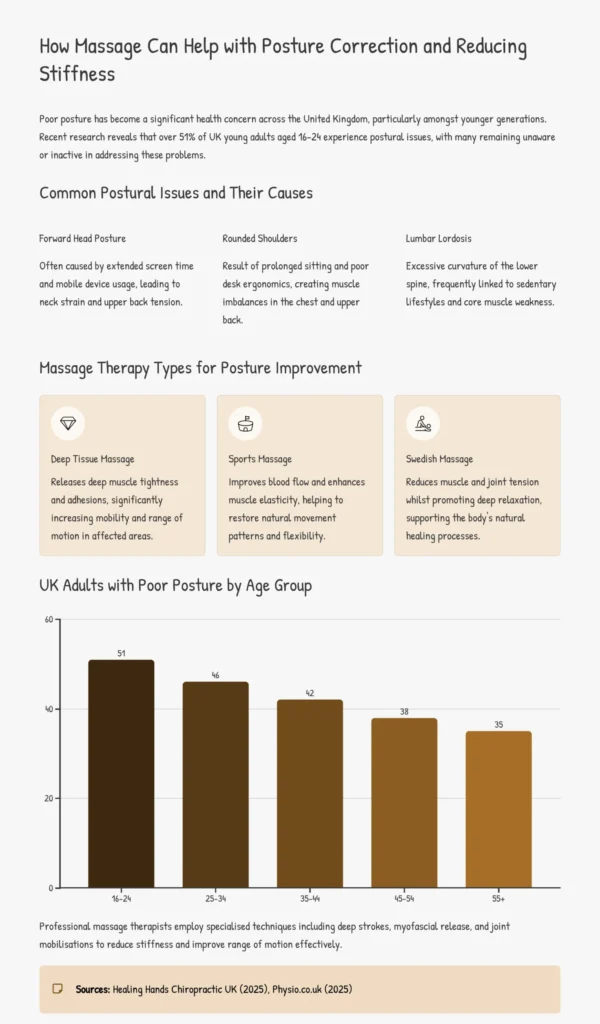
Measuring progress: how to track posture improvements
Tracking progress helps you and your therapist know what’s working.
Simple tests and pictures
Take a before photo (side view). Repeat every 2–4 weeks. Look at head position, shoulder rounding, and pelvic tilt. Small changes are wins.
Functional improvements
Measure real-life gains: sitting time without pain, improved reach, fewer headaches, or better sleep. These are often more meaningful than small visual tweaks.
Practical tips you can start today
Here are evidence-based, simple actions that, combined with massage, speed up posture improvement.
A 5-minute daily mobility routine
- Thoracic extension over a chair (1 min).
- Doorway pec stretch (30–60 sec each side).
- Glute bridges (2 sets of 10).
- Cat-cow mobilization (1 min).
Do these daily. They’re short but add up.
Workstation micro-habits
- Use a timer to stand every 30–45 minutes.
- Keep your monitor at eye level.
- Place feet flat and hips slightly above knees when sitting.
How long until you see change? Realistic timelines?
Change is gradual. Here’s a practical timeline most people follow:
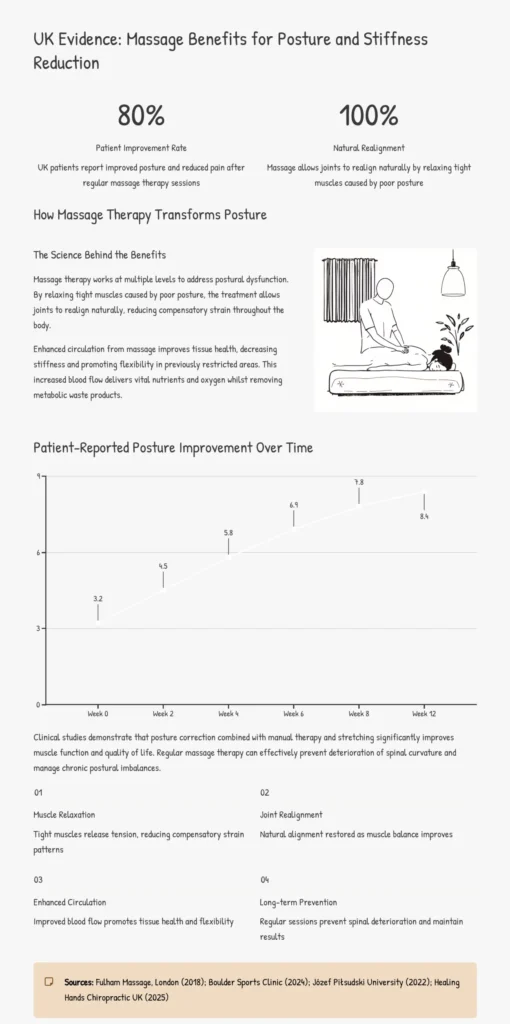
- Immediate: reduced stiffness, better mobility right after a session — often felt the same day.
- 2–6 weeks: noticeable posture shifts when massage is combined with exercises and better habits.
- 3+ months: sustainable postural improvements, reduced recurrence of pain, and stronger movement patterns — this is where habits become automatic.
Consistency matters more than intensity. A steady, moderate program beats sporadic deep interventions.
How therapists at Elysia Wellness integrate massage into posture programs?
At Elysia Wellness, the approach is practical and personalized. Therapists begin with a brief functional screen. They use targeted techniques (myofascial work, trigger point therapy, and therapeutic stretching) and always pair manual work with home-based mobility and strengthening suggestions. The goal is clear: reduce stiffness, restore functional movement, and teach small daily habits that keep you upright and comfortable.
This method is the difference between temporary relief and lasting change. Massage creates the space; exercises and habits fill it in.
Massage is not a standalone miracle. But used correctly, it is one of the most effective hands-on tools to reduce stiffness and accelerate posture correction. It loosens tight tissues, calms overactive muscle guarding, and prepares the body to learn new movement patterns. Paired with simple exercises, better daily habits, and a little patience, massage helps you stand taller, move easier, and reduce the small pains that steal your focus.
If you’re exploring local options and want a therapist who focuses on posture and practical results, mentioning Massage Crystal Palce or visiting a clinic like Elysia Wellness can connect you with professionals who combine manual skill with real-world coaching.
Local Focus: Massage in Crystal Palace’
At Elysia Wellness, we’re proud to serve the community of Crystal Palace and surrounding neighborhoods like Gipsy Hill. Our wellness clinic is conveniently located near well-known landmarks, including the Westow House Pub & Hotel, and close to major intersections such as Gatestone Road and Beardell Street.
Being positioned at the heart of Crystal Palace (coordinates: 51.41919077612232, -0.08271210595706809) allows us to make therapeutic massage services accessible to local residents who want to improve posture, reduce stiffness, and enjoy better movement in their daily lives. Whether you’re walking from Gipsy Hill station or exploring the vibrant Crystal Palace Triangle, you’ll find Elysia Wellness within easy reach.
Get Massage Services at Gipsy Hill Now
Looking for professional Massage near Gipsy Hill? Visit Elysia Wellness in Crystal Palace for therapies that ease stiffness, improve posture, and restore balance.
Navigate from Gipsy Hill to Elysia Wellness
Just a few minutes away from Gipsy Hill Station, our clinic is located near Westow House Pub & Hotel, at the heart of Crystal Palace. Use the map below to plan your visit.
Frequently Asked Questions
Q1: How soon after a massage will I feel improvement in my posture?
You may notice reduced stiffness and a better sense of alignment immediately after a session. Visible posture changes generally take a few weeks when massage is combined with daily mobility exercises and better ergonomics.
Q2: Can massage permanently fix bad posture on its own?
No — massage alone usually won’t create permanent change. It’s a catalyst. Permanent improvement requires movement practice, strength where it’s weak, and consistent daily habits.
Q3: Which type of massage is best if I have a rounded upper back and tight chest?
A blend of myofascial release, soft tissue work on the chest (pectorals), and thoracic mobilization tends to work best. Add strengthening of the upper back to keep gains after the session.
Q4: Is it safe to get deep tissue massage if I have chronic back pain?
Often yes, but it depends on the cause of the pain. Always consult a healthcare provider if you have serious spine conditions, recent surgery, or unexplained neurological symptoms. A good therapist will modify depth and technique to keep you safe.
Q5: How does massage work with exercise to speed up posture correction?
Massage temporarily reduces tension and makes tissues more responsive. That window is ideal for targeted mobility and strengthening exercises. Doing both creates a feedback loop: massage frees movement, exercises build stable control, and better control reduces the likelihood of tension returning.