Skip to content
Deep tissue massage is a specialised form of bodywork that targets the deeper layers of muscles and connective tissues. Unlike superficial massage techniques, deep tissue massage focuses on relieving chronic tension, breaking down adhesion’s, and promoting overall physical wellness. When done correctly, a Deep Tissue Massage at Home can provide the same therapeutic benefits as a professional session, while allowing individuals to take control of their own self-care routine. Elysia wellness believes in teaching safe, informed techniques that maximise benefits and minimize risk.
What Makes Deep Tissue Massage Effective
The Science Behind Muscle Tension
Muscles can become tight and knotted due to stress, poor posture, or repetitive movements. Deep tissue massage works by applying firm, deliberate pressure along the muscle fibers and connective tissues, breaking down adhesions and promoting blood flow.
Physiological Benefits
By releasing tension, deep tissue massage reduces muscle stiffness, improves circulation, and supports the lymphatic system, which helps the body remove metabolic waste. It also signals the nervous system to relax, which can reduce stress levels and promote mental clarity.
Preparing Your Body and Mind at Home
Creating the Optimal Environment
A calm, quiet space is essential for a home deep tissue session. Soft lighting, minimal noise, and a comfortable surface such as a yoga mat, firm mattress, or massage table can enhance effectiveness.
Mental Preparation
Before beginning, take a few deep breaths, focus on relaxing your mind, and visualize tension leaving your muscles. Mental readiness is just as important as physical preparation.
Necessary Tools
While hands are sufficient, using tools like massage balls, foam rollers, or handheld massagers can make targeting deep muscles easier. Ensure all tools are designed for safe self-massage.
Understanding the Body: Key Muscle Groups
Neck and Shoulder Area
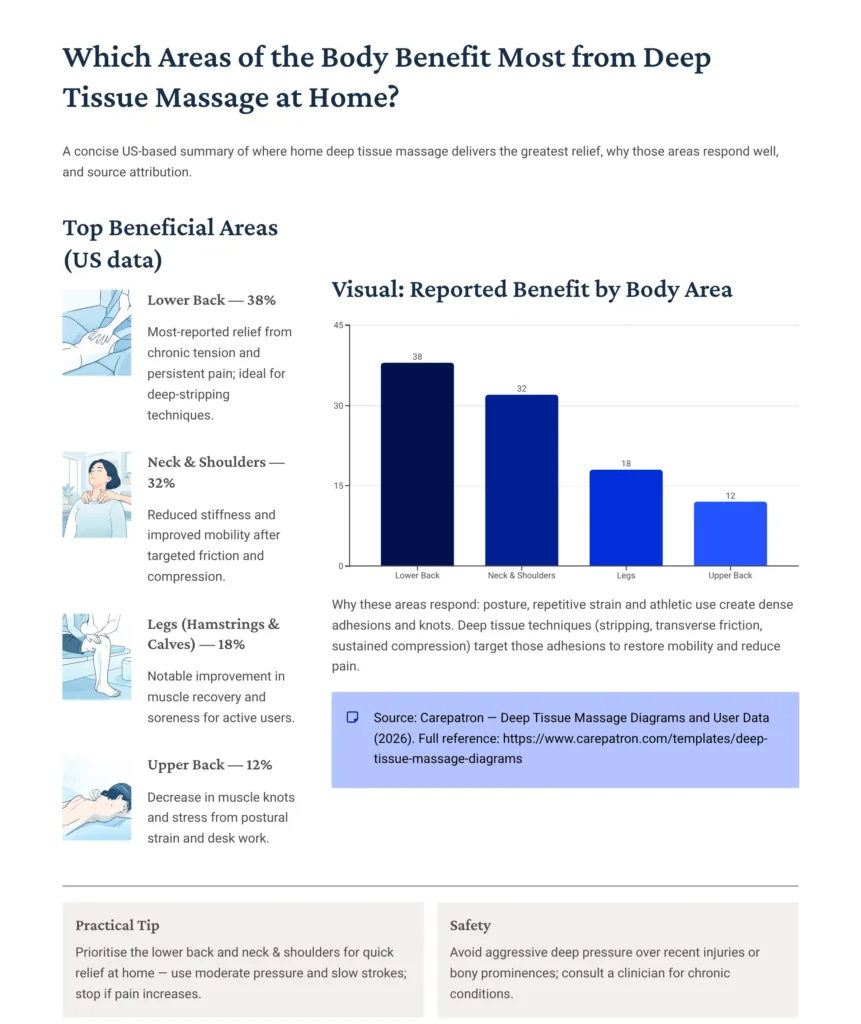
The neck and shoulders are common areas of tension due to prolonged sitting or stress. Targeting the trapezius, rhomboids, and deltoids can relieve stiffness and prevent headaches.
Upper and Lower Back
Deep tissue work along the paraspinal muscles can improve posture and ease chronic back pain. The lower back, glutes, and lumbar muscles often hold tension from long hours of sitting.
Arms and Hands
Muscles in the forearms and hands are frequently overused, especially for people who type or perform repetitive movements. Releasing tight forearm and hand muscles can prevent repetitive strain injuries.
Legs and Glutes
Hamstrings, quadriceps, calves, and gluteal muscles bear much of the body’s weight. Focusing on these areas can improve mobility and prevent muscle imbalances.
Feet and Ankles
Tension in the feet and ankles often goes unnoticed. Massaging these areas improves circulation, supports balance, and alleviates discomfort from prolonged standing.
Step-by-Step Guide to a Deep Tissue Massage at Home
Step 1: Warm-Up Stretches
Before applying deep pressure, perform gentle stretches to warm the muscles and improve blood flow. This prepares the tissues for deeper manipulation.
Step 2: Applying Pressure Correctly
Use slow, deliberate strokes with your thumbs, knuckles, or massage tools. Focus on one area at a time, and avoid pressing directly on bones or joints.
Step 3: Listening to Your Body
Pay attention to signals of discomfort versus pain. Mild discomfort is normal, but sharp pain is a warning to reduce pressure or change technique.
Step 4: Targeting Muscle Fibers
Work along the natural lines of the muscle, applying pressure along the fibers. Gradually increase depth as the muscle relaxes.
Step 5: Incorporating Stretching Post-Massage
After releasing tension, gently stretch the massaged muscles to enhance flexibility and prolong benefits.
Deep Tissue Massage Techniques for Specific Areas
Neck and Shoulders
Circular motions along the trapezius and shoulder blades help release knots. Avoid pressing directly on the spine.
Back and Spine
Apply slow strokes along the paraspinal muscles to target deeper layers. Focus on tension points while keeping pressure safe.
Legs and Glutes
Use palms, fists, or massage tools to reach deep muscle layers. Concentrate on areas that feel tight or fatigued.
Arms and Hands
Massage forearms from wrist to elbow, and gently manipulate hand muscles and fingers to release strain.
Feet and Ankles
Use thumbs or massage balls to work on arches, heels, and ankles. Circular pressure helps stimulate circulation and relieve discomfort.
The Nervous System and Deep Tissue Massage
How Massage Communicates with the Nervous System
Deep tissue massage activates the parasympathetic nervous system, promoting relaxation and reducing stress hormone levels. The body responds with decreased heart rate, lower blood pressure, and a feeling of calm.
Beyond muscle relief, massage plays a powerful role in regulating how the nervous system responds to stress and physical tension. Understanding how massage therapy influences the nervous system helps explain why techniques like deep tissue work can trigger deeper relaxation, improve sleep quality, and support emotional balance over time. When the body shifts into a parasympathetic state, healing processes become more efficient and recovery feels more complete.
Pain Modulation
By stimulating pressure receptors and increasing blood flow, massage reduces pain signals and promotes the release of endorphins, the body’s natural painkillers.
Enhanced Mind-Body Connection
Regular self-massage increases body awareness. Recognizing areas of tension helps prevent overuse injuries and encourages healthier movement patterns.
Physical and Mental Benefits
Chronic Pain Relief
Deep tissue massage alleviates persistent pain from muscle adhesions, tight fascia, or overworked muscle groups.
Improved Circulation
Enhanced blood flow delivers oxygen and nutrients to tissues, accelerating healing and promoting overall vitality.
Stress Reduction
By calming the nervous system, massage helps lower cortisol levels, reduce anxiety, and improve mood.
Flexibility and Mobility
Loosening deep muscles increases range of motion, supports joint health, and reduces the risk of injury during physical activity.
Safety Tips for Home Massage
Know Your Limits
Avoid areas of injury or inflammation. Use controlled, gradual pressure rather than forceful manipulation.
Recognize Contraindications
Individuals with high blood pressure, recent surgery, or certain chronic conditions should consult a healthcare professional before attempting deep tissue massage.
Monitor Post-Massage Effects
Some mild soreness is normal, but severe or prolonged pain is a sign to adjust technique or seek professional guidance.
Tips for Enhancing Benefits
Hydration
Drink water before and after massage to support circulation and flush out toxins released during muscle manipulation.
Breathing Techniques
Deep, steady breathing encourages muscle relaxation and enhances overall effectiveness.
Consistent Practice
Regularly performing home deep tissue massage ensures cumulative benefits and helps prevent recurring tension.
Elysia Wellness Serving the Penge Community and Beyond in London
Elysia Wellness is dedicated to serving the diverse needs of the local community of London, including individuals residing in neighborhood like Penge. With its convenient location near landmarks such as the Westow Park and major intersections like Church Road and Fox Hill (coordinates: Latitude: 51.4186947, Longitude: -0.0823313), we offer Deep Tissue Massage at Home services.
Get Deep Tissue Massage at Home Services at Penge Now
Call Us or Contact Us +44 20 3916 6787
Navigate from Penge to Elysia Wellness Now
A Deep Tissue Massage at Home crystal palace London can profoundly impact both physical and mental well-being. By understanding your body, focusing on key muscle groups, and applying safe techniques, you can enjoy the therapeutic benefits of deep tissue massage without leaving home. Elysia wellness emphasizes safety, mindfulness, and proper technique to make self-administered massage effective, restorative, and relaxing. With regular practice, this approach can help release tension, enhance mobility, and support whole-body wellness.
FAQs
1. Can deep tissue massage be performed safely at home?
Yes, with proper technique, controlled pressure, and awareness of your body, self-massage can be safe and effective.
2. Which areas respond best to deep tissue massage?
Common areas include the neck, shoulders, back, glutes, legs, and feet, where tension tends to accumulate.
3. How often should I perform deep tissue massage at home?
One to two sessions per week are recommended for most individuals, depending on muscle tightness and activity level.
4. Can deep tissue massage help with chronic pain?
Yes, it can relieve chronic tension, improve circulation, and support the nervous system to reduce discomfort.
5. What tools are useful for home deep tissue massage?
Foam rollers, massage balls, and handheld devices can enhance precision and reach deeper muscle layers safely.