Skip to content
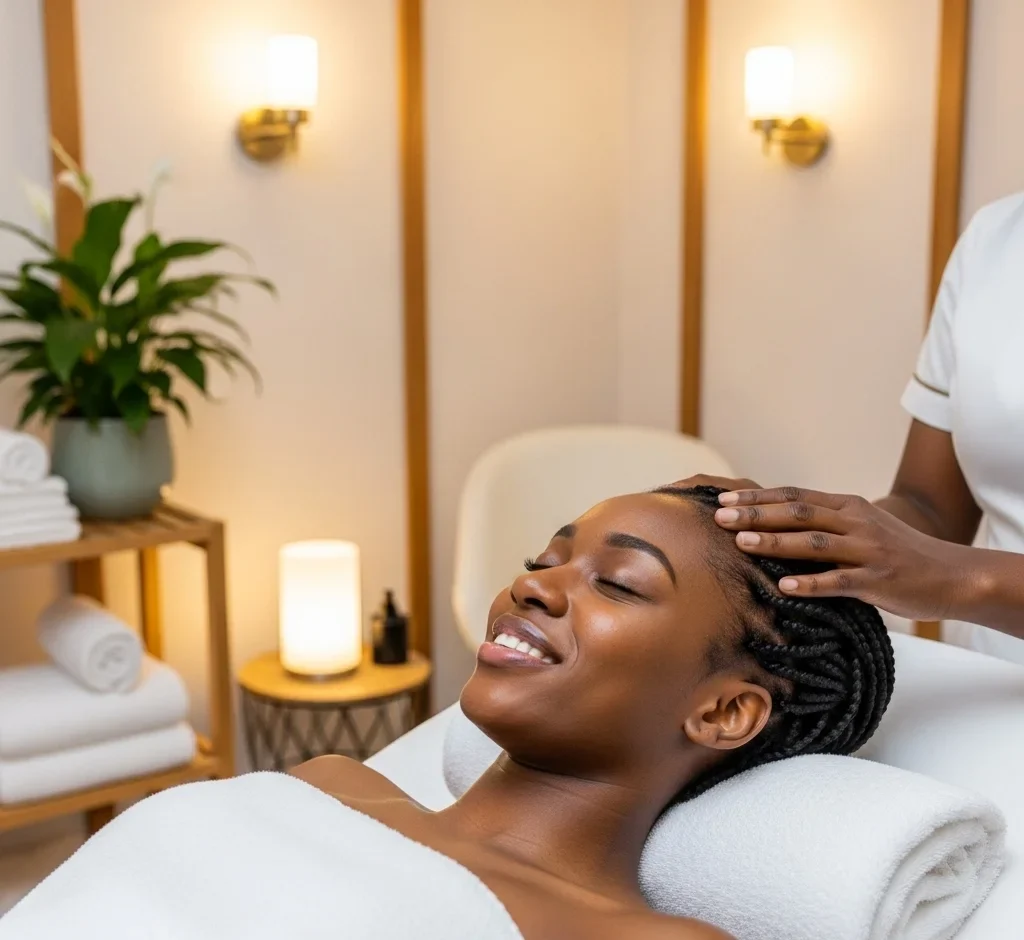
Sleep poor? Tense neck? Headaches that won’t quit? You’re not alone. Life throws deadlines, screens, and noise at us. Our bodies respond by tensing up. That tension shows up as headaches, tight shoulders, insomnia, or a foggy mind.
Indian Head Massage is a gentle, focused therapy that targets the scalp, neck, shoulders, and face. It’s simple. It’s effective. And it helps with a range of common problems. This article explains the top seven health benefits, the science behind them, and how to use the technique safely. I’ll also cover who benefits most, a quick DIY routine, and how to choose a therapist — including how to find local options like Indian Head Massage Crystal Palace at places such as Elysia Wellness.
This is informational, not a sales pitch. But it does help you make a smart choice if you’re considering this therapy.
What is Indian Head Massage? — a clear snapshot
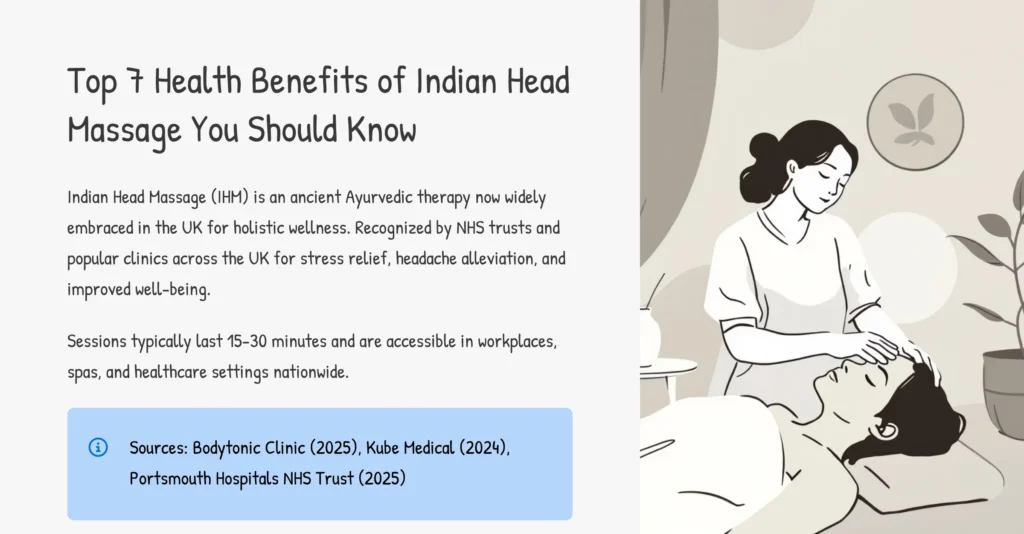
Indian Head Massage focuses on the upper body: scalp, forehead, temples, neck, shoulders, and upper back. It blends rhythmic strokes, gentle kneading, light acupressure, and slow circular movements. Sessions are usually seated, fully clothed, and take 20–45 minutes.
Core techniques used
- Scalp strokes: long, soothing runs of the hands across the scalp.
- Circular pressure: gentle, steady pressure at the base of the skull and temples.
- Kneading: small, controlled kneads in the neck and shoulders.
- Jaw and face release: light thumb movements around the jaw and cheekbones.
How a typical session is structured
You’ll have a quick chat first. The therapist asks about symptoms, medical history, and goals. Then you sit in a comfortable chair. The massage moves from shoulders up to the scalp and back down. It ends with slow breathing and a short aftercare chat.
How touch changes things — the body basics?
Touch isn’t just pleasant. It triggers measurable changes in the body. Think of massage as a gentle reset button.
Nervous system calm-down
Slow, predictable touch signals safety to the brain. That activates the parasympathetic nervous system — the “rest and digest” mode. Heart rate slows. Breathing deepens. You move from fight-or-flight toward relaxation.
Hormones and chemicals
Massage can lower cortisol, the stress hormone. It can also boost feel-good chemicals like serotonin. Serotonin helps mood and later converts to melatonin — the sleep hormone. That creates a natural pathway from calm to sleep.
Top 7 health benefits (and how they work)
Below are the seven key benefits people often report after regular Indian Head Massage. For each benefit I’ll explain what happens, who sees the biggest gains, and a quick tip.
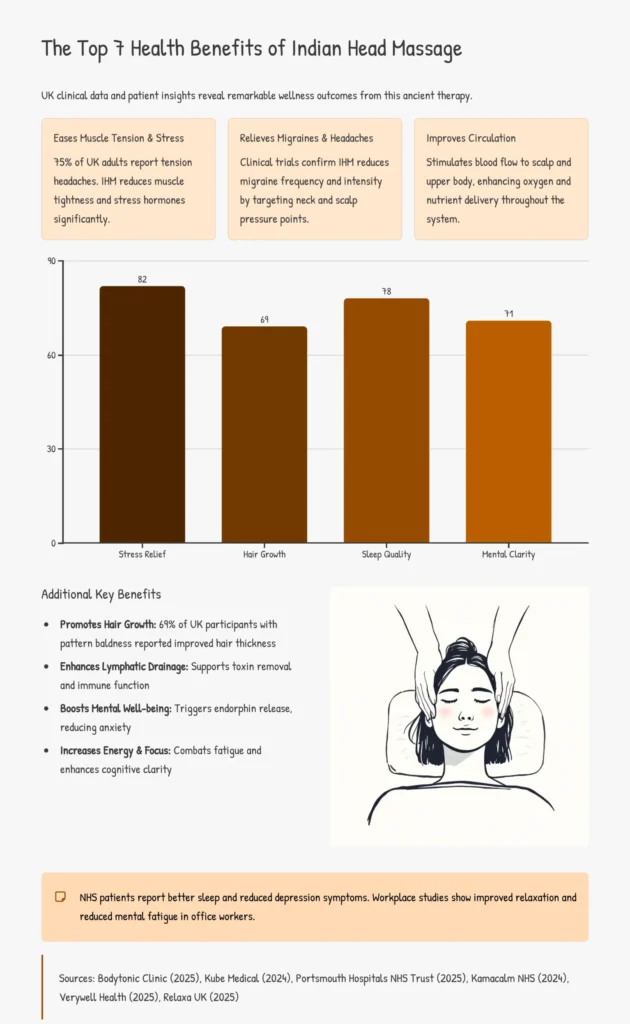
1. Reduces stress and anxiety
What happens: Gentle, rhythmic strokes tell your nervous system it’s safe. Cortisol drops. Heart rate and blood pressure fall slightly. That’s a physiological route to calm.
Who benefits most: People with chronic work stress, caregivers, shift workers, and anyone who feels “wired” at night.
Quick tip: Schedule a session in the evening or late afternoon to help unwind before bed.
2. Improves sleep quality
What happens: By reducing physiological arousal and encouraging melatonin through serotonin pathways, massage helps you fall asleep faster and stay asleep longer.
Who benefits most: People with mild insomnia caused by stress or tension. Not a replacement for medical treatment for sleep apnea or severe sleep disorders.
Quick tip: Pair a session with a consistent bedtime routine — dim lights, no screens, and a short breathing exercise.
3. Relieves tension headaches and reduces migraine triggers
What happens: Neck and scalp tension often contributes to headaches. Releasing tight muscles at the base of the skull and around the jaw reduces sensory input that triggers pain.
Who benefits most: Office workers, people with jaw clenching (bruxism), and those who get tension headaches frequently.
Quick tip: Ask the therapist to focus on the occiput (base of the skull) and the upper trapezius muscles.
4. Eases neck and shoulder pain
What happens: Slow kneading increases local blood flow and relaxes contracted muscles. Over time this reduces stiffness and improves range of motion.
Who benefits most: People with desk jobs, heavy bag carriers, or those who sleep in awkward positions.
Quick tip: Regular short sessions (weekly or bi-weekly) are more effective than long, infrequent ones.
5. Improves scalp and hair health
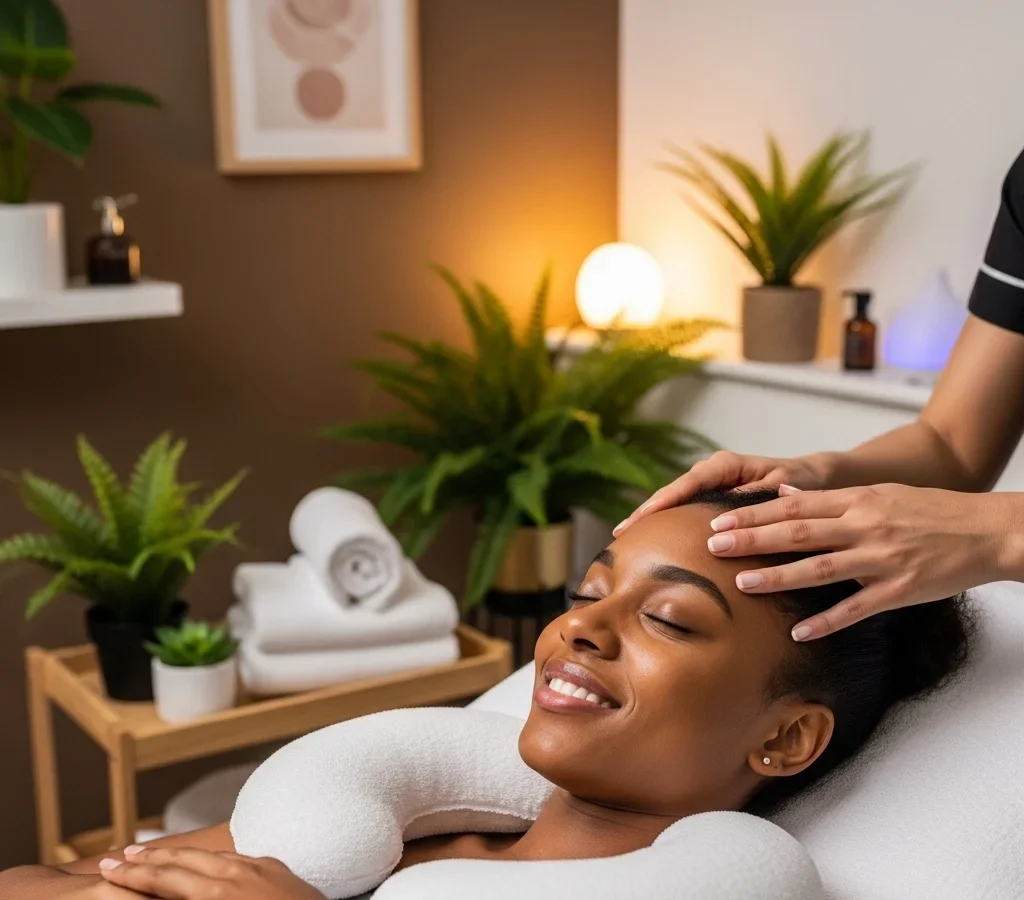
What happens: Light stimulation of the scalp boosts circulation and helps clear debris from hair follicles. Some people notice shinier, less brittle hair over time.
Who benefits most: Those with dry scalp, poor circulation to the scalp, or stress-related hair shedding (telogen effluvium).
Quick tip: Use a light, non-greasy oil for a short scalp massage — but only if you don’t mind washing your hair afterward.
6. Supports mental clarity and mood
What happens: Reduced stress and increased serotonin improve mood. Many people report better focus and mental clarity after a session.
Who benefits most: Creatives, students, and anyone who needs to “clear the fog” before a busy day.
Quick tip: Schedule a short session before a demanding work period for a calm, focused start.
7. Enhances lymphatic drainage and circulation
What happens: Gentle strokes encourage fluid movement in the soft tissues. This can reduce swelling and support immune function by improving lymph flow.
Who benefits most: People with mild fluid retention or those recovering from minor injuries near the neck and head.
Quick tip: Drink water after your session to help flush metabolic byproducts released during massage.
Who gains the most — real-world groups?
Indian Head Massage helps a broad range of people. Here are groups that often notice the biggest improvements:
- People with stress-related sleep problems.
- Office workers with neck/shoulder stiffness.
- Shift workers needing calm between irregular sleep windows.
- Parents and caregivers who need quick, restorative breaks.
- Individuals with tension headaches, mild anxiety, or jaw tension.
It’s not a cure-all. But when tension and stress are major factors, it’s a reliable tool.
How often should you get Indian Head Massage?
Frequency depends on your goals.
- Acute stress or pain: 1 session per week for 4–6 weeks.
- Maintenance and prevention: Every 2–4 weeks.
- Quick reset: 10–20 minute mini-sessions bi-weekly.
Consistency matters. Like brushing teeth, regular maintenance keeps small problems from becoming big ones.
What to expect during a sleep- or health-focused session
Before the session
Your therapist asks about your health, medications, and goals. Be honest about headaches, dizziness, high blood pressure, or recent injuries.
During the session
You sit in a comfortable chair. The therapist works from shoulders to scalp and back. Pressure varies but should never be painful. Expect slow rhythms, held pressure points, and calm breathing cues.
After the session
You may feel relaxed, sleepy, or energized. Drink water. Avoid screen-heavy work for at least 30 minutes if possible. Notice small changes in sleep, mood, or pain over the following 48 hours.
DIY: A short 7-minute Indian Head Massage you can try?
You don’t need to visit a clinic every time. Here’s a safe, simple routine you can use before bed.
Step-by-step (7 minutes)
- Sit tall. Find a quiet chair. Breathe slowly three times.
- Neck release (60 sec): Place hands on shoulders and squeeze gently. Roll shoulders back.
- Base-of-skull circles (60 sec): Use fingertips at the skull base. Make small clockwise circles. Hold light pressure for 2–3 seconds, then release.
- Scalp strokes (90 sec): With flat hands, sweep from front hairline to back in long, slow strokes. Repeat 6–8 times.
- Temple rub (30 sec): Use index and middle fingers on temples in slow circles.
- Jaw glide (30 sec): Place thumbs under jaw toward ears and glide outward.
- Finish (30 sec): Close eyes and breathe in for 4, out for 6.
Tools and oils
Use a light oil sparingly if desired (jojoba or sweet almond). Patch-test first. Keep movements slow, rhythmic, and comfortable.
Safety, contraindications, and when to see a doctor?
Indian Head Massage is low-risk. Still, take precautions.
- Avoid strong pressure with recent head or neck injuries.
- If you have uncontrolled high blood pressure, blood clotting disorders, or certain cardiovascular conditions, consult a doctor first.
- Active skin infections, open wounds, or severe scalp conditions should be examined before massage.
- If you feel dizziness, severe pain, or neurological symptoms during a session, stop and seek medical advice.
Always inform your therapist of medications, recent surgeries, or consult your GP if in doubt.
Choosing a therapist — what to ask and look for?
A good therapist listens. They adapt pressure and technique to your needs.
Questions to ask
- What training do you have in Indian Head Massage?
- Do you work with clients who have sleep issues or headaches?
- Will the session be tailored to my medical history?
- Can you show me gentle techniques I can do at home?
Local search and credentials
If you’re local to Crystal Palace, search for Indian Head Massage Crystal Palace to find practitioners who advertise specifically in the area. Look for clear training, client reviews, and good communication. Elysia Wellness is an example of a local practice that offers head-focused therapies in the Crystal Palace area and often tailors sessions to sleep and stress concerns. Remember, comfort with the therapist is as important as credentials.
Pairing massage with other healthy habits
Massage works best with other good habits:
- Keep regular sleep and wake times.
- Reduce screen time before bed.
- Practice simple breathing or mindfulness after a session.
- Use heat (warm shower) or gentle stretching if needed.
Think of massage as a helpful tool in a wider toolkit for better health.
Evidence snapshot — what research and practice show
Scientific studies on massage demonstrate consistent reductions in perceived stress and improved sleep quality in many populations. Head-focused therapies specifically show promise for tension headaches, reduced muscle tone in the neck, and subjective improvements in sleep.
Limitations: many studies are small and vary in method. Still, real-world practice and patient reports strongly support massage as a safe, adjunctive therapy for stress, pain, and sleep issues.
Common myths — quick debunks
- Myth: It’s just a hair treatment.
Fact: It’s mainly about nervous system and muscle relaxation; hair benefits are secondary. - Myth: Stronger pressure equals better results.
Fact: For head and neck, gentle and steady beats harsh force. Comfort matters. - Myth: One session will fix chronic problems.
Fact: One session helps, but regular care and broader lifestyle changes give lasting results.
Indian Head Massage is a simple, low-risk therapy with measurable benefits for stress, sleep, pain, and mood. It works by calming the nervous system, improving circulation, and releasing tight muscles in the head, neck, and shoulders. Whether you try a professional session or a short DIY routine, this technique offers a practical way to add calm and clarity to your day. If you live near Crystal Palace and want local options, use terms like Indian Head Massage Crystal Palace to find providers who focus on these benefits. Places such as Elysia Wellness often combine traditional techniques with modern care to address both sleep and tension-related problems.
Elysia Wellness Serving the Gipsy Hill Community and Beyond in Crystal Palace
At Elysia Wellness, we are proud to serve the vibrant and diverse community of Crystal Palace, including nearby neighborhoods such as Gipsy Hill. Conveniently located near well-known landmarks like Westren Park and close to major intersections such as Bedwardine Road and Carberry Road (coordinates: 51.41921654852554, -0.0838118828370694), our wellness space is easy to access for local residents.
We specialize in therapies that support both physical and emotional wellbeing, including our popular Indian Head Massage. This treatment helps relieve tension, improve sleep, and restore balance — making it an ideal choice for individuals in Crystal Palace and the surrounding areas who are seeking natural ways to manage stress and enhance relaxation.
Whether you’re a resident of Gipsy Hill or traveling from nearby parts of South London, Elysia Wellness offers a welcoming space where you can experience the benefits of holistic care close to home.
Get Indian Head Massage Services at Gipsy Hill Now
Looking for a natural way to ease stress, reduce headaches, and sleep better? Experience the benefits of Indian Head Massage in Gipsy Hill with Elysia Wellness.
📞 Call us today at +44 20 3916 6787
📧 Email: elysiawellness4me@gmail.com
FAQs
Q1: How soon will I notice benefits after an Indian Head Massage?
Many people feel calmer immediately and may sleep better the same night. For chronic issues, expect gradual improvements over several sessions — often 3–6 treatments for noticeable, lasting change.
Q2: Can Indian Head Massage help with migraines?
It can help tension-triggered headaches and reduce frequency for some people. For classical migraines, responses vary — some find relief, others need medical treatment. Always check with a healthcare provider for frequent or severe migraines.
Q3: Is it safe to do Indian Head Massage during pregnancy?
Gentle head and shoulder work is generally safe, but check with a midwife or doctor first. Therapists should avoid deep abdominal or back pressure and will adapt techniques for pregnancy.
Q4: Can I combine Indian Head Massage with other treatments?
Yes. It pairs well with physiotherapy, counseling for anxiety, relaxation techniques, and good sleep hygiene. Tell all your practitioners about other therapies you’re using.
Q5: How do I choose between a DIY routine and professional sessions?
DIY is great for daily maintenance and quick resets. Professional sessions provide deeper, targeted relief and tailored techniques. Use DIY between professional treatments for the best balance.